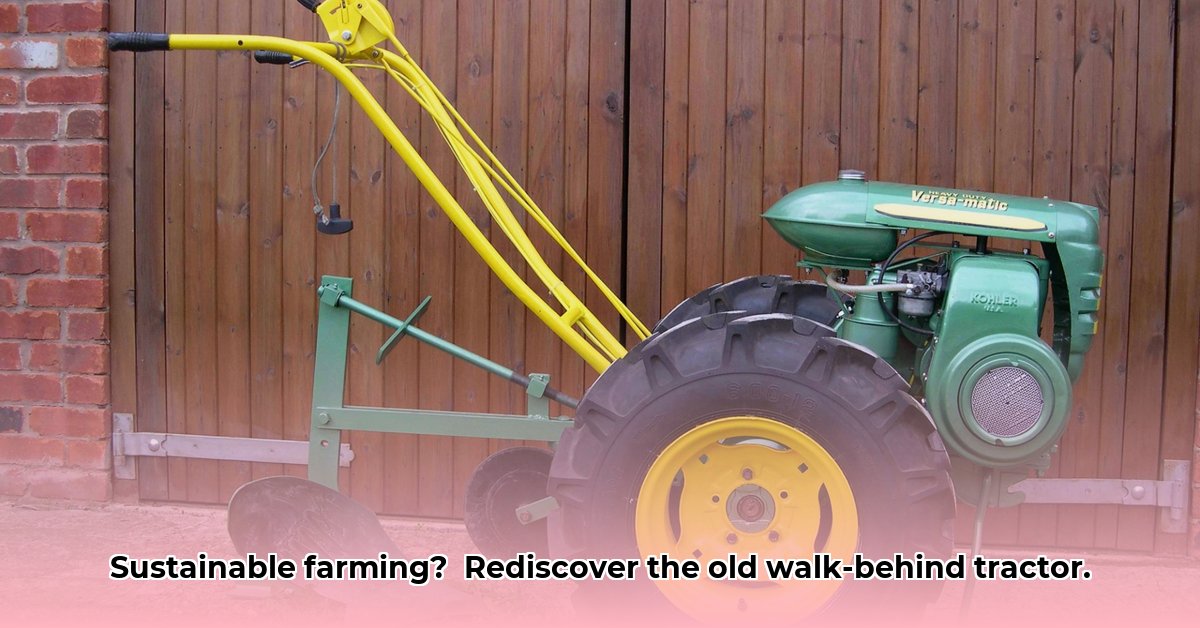
Old Walk-Behind Tractors: Power in Sustainable Farming
Forget the behemoths of modern agriculture. There's a quieter, more sustainable approach to farming: the old walk-behind tractor. These machines, often viewed as relics, offer a compelling blend of affordability, maneuverability, and environmental friendliness, proving that sometimes, smaller is better. For more information on small tractors, check out this helpful resource. This guide will help you understand their advantages, master their maintenance, and maximize their use for a more sustainable and rewarding farm.
Rediscovering the Charm of a Vintage Workhorse
Before massive tractors dominated the landscape, resourceful farmers relied on walk-behind tractors. These aren't just nostalgic pieces; they represent a practical, environmentally responsible approach to modern farming. Their lighter weight minimizes soil compaction, their fuel efficiency reduces greenhouse gas emissions, and their quieter operation makes them a neighborly choice.
The Environmental Perks of a Walk-Behind Tractor
Large tractors compact soil, hindering plant growth and overall soil health. Walk-behind tractors, being significantly lighter, alleviate this problem. Their fuel efficiency translates to fewer emissions, and their quieter operations reduce noise pollution—a significant benefit for both the environment and your community.
Finding and Getting Started with Your New (Old) Friend
Finding your ideal tractor might require some searching. Check antique shops, online marketplaces (eBay, Craigslist), and local farm auctions. Inspect thoroughly for rust, damage, and mechanical issues. With care, you can revive a vintage workhorse.
Step-by-Step Tractor Restoration
Thorough Cleaning: Begin by cleaning away all dirt and debris. This allows for a complete assessment of the tractor's condition.
Careful Inspection and Repair: Examine the engine, transmission, and all moving parts. Replace worn components; consult manuals or seek expert help if needed. This stage requires patience but is crucial for reliable operation.
Testing and Fine-Tuning: Before full use, test all functions, adjusting settings for optimal performance. Ensure everything operates smoothly.
Keeping Your Old Tractor Running Smoothly: A Maintenance Guide
Regular maintenance is essential for longevity and efficient operation. It’s preventative care that saves you from costly repairs down the line.
Oil Changes: Follow the manufacturer's recommendations for regular oil changes to ensure proper lubrication.
Air Filter Care: Clean or replace the air filter regularly to prevent dust and debris from entering the engine, maintaining efficiency and preventing damage. This simple step significantly extends engine life.
Spark Plug Inspection: Regularly inspect spark plugs for fouling or wear. Faulty plugs lead to poor starting and performance.
Belt Inspection: Regularly check belts for wear and tear. Worn belts can cause breakdowns.
Sustainable Farming with Your Walk-Behind Tractor
Walk-behind tractors are surprisingly versatile tools for sustainable farming practices. They offer several advantages over larger machines:
Precision Tilling: Their maneuverability is ideal for smaller plots and working around obstacles.
Efficient Seed Distribution: They're perfect for small-scale planting, minimizing soil disturbance. This precision sowing leads to improved germination rates.
Weed Control: With attachments, you can effectively manage weeds, reducing the need for chemical herbicides.
Cultivation: You can maintain crop rows with precision spacing, optimizing growth and minimizing soil disturbance. This reduces the need for additional tillage passes, preserving valuable soil health.
Weighing the Pros and Cons: Is an Old Walk-Behind Tractor Right for You?
Before deciding, consider these advantages and disadvantages:
| Pros | Cons |
|---|---|
| Lower environmental impact (less fuel, noise) | Lower power and slower speed than larger tractors |
| Lower fuel costs | Fewer readily available attachments |
| Improves soil health (less compaction) | Requires more manual labor |
| Affordable purchase price | Repair parts might be harder to find |
| Easier to maintain and repair | May need more frequent maintenance |
How to Choose the Best Walk-Behind Tractor for Sustainable Farming
Assessing Your Needs: The Foundation of Your Choice
Before buying, assess your farm's size, soil type, and primary tasks. Different tractors excel at different jobs. A lightweight model suitable for seeding delicate crops might struggle with tilling heavy clay soil.
Horsepower and its Implications
Horsepower (HP) affects power output. High HP means more power but also higher fuel consumption. Choose a suitable HP based on your needs; avoid over- or under-powering your tasks. For example, a small vegetable garden may only need 5 HP, whereas a larger plot with heavier soils might need something in the 7-10 HP range.
Fuel Efficiency: A Cornerstone of Sustainability
Fuel costs are a significant expense. Diesel engines generally have better fuel economy than gasoline, though initial costs tend to be higher. Consider the environmental impact; diesel engines have a larger carbon footprint than gasoline.
Maintenance and Repair: Planning for the Long Haul
Ease of maintenance and parts availability significantly impact long-term costs. Simpler mechanics and readily available parts translate to less downtime and lower repair bills.
Selecting Attachments: Expanding Your Tractor's Capabilities
Attachments (tillers, planters, cultivators) add versatility. Ensure compatibility before purchasing.
Budgeting for Success: A Realistic Assessment
Consider the initial purchase price, fuel, maintenance, and potential repairs when budgeting. A well-maintained older tractor can often outlast multiple cheaper models.
Step-by-Step Guide to Selection
- Assess your needs: Land size, soil type, farming tasks.
- Research models: Compare HP, fuel efficiency, features.
- Consider attachments: Ensure compatibility.
- Check parts availability: Easy access to spares.
- Set a budget: Include purchase, fuel, maintenance, repairs.
- Test before buying: Rent or borrow a similar model.
This guide provides actionable steps towards embracing sustainable farming practices. By understanding the benefits and limitations of old walk-behind tractors, you can make informed decisions, optimize your farming methods, and contribute to a more environmentally conscious agricultural future.